
I got interested in Modern Yu-Gi-Oh! during a TCG YouTube rabbit hole at the end of 2024. I spent hours and hours reading the rulebook, watching a number of videos on how to play, and bought most of the structure decks. This was a complete waste of time. 12 months later, I am finally able to play competitively at a local level, but I wasted close to the first 6 months trying to figure out how to play a game that didn’t resemble modern Yu-Gi-Oh!. Yu-Gi-Oh! has changed so much from its retro formats that the rulebook and introductions are not irrelevant, but bear little, if any, resemblance to the modern game. It would be like trying to prepare someone to play in the NBA who has never watched or seen a basketball game in their life, by giving them a basketball rulebook and some YouTube tutorials. The information isn’t wrong, it just doesn’t prepare you for what the game is. It is all well and good talking about how you get one Normal Summon per turn, or how to tribute summon level 5 or higher monsters, but the reality of Modern Yu-Gi-Oh! is that many decks summon 20 times without ever using their Normal Summon. No rulebook or learn-to-play guide prepares you for this. I have built only one deck that performs a tribute summon of the 100+ deck variants I have built in the last 12 months. It is important to know about it, but it doesn’t prepare you for the game. All it does is set limits that 99 times out of 100, you will never even come close to. Unlike other TCGs, there is no resource system, and therefore, there is often no hard limit on the pace of the game. There is no “set one card and pass.” It is usually full gas, or you lose. You do not build up towards your strongest board over multiple turns. You enter into a combo to establish your end board in a single turn. And I love it.
The problem is that standard tutorials do not prepare you for what is to come. I went to my first locals, playing a Blue-Eyes structure deck and could not understand a thing that was going on. Why is this person playing on my turn? Why am I no longer allowed to play on my turn? Tutorials teach the game from foundations that are necessary, but they often do so with no vision of what the game actually is. They do not prepare you for the game that you are about to play. You are left feeling that the game you learned about, and the game you are trying to play, are two different things. I want to create a tutorial (with very clear expectations from the outset) of everything I wish I had been taught when I started, in the order that I wish I had been taught it.
Modern Yu-Gi-Oh! has a very steep learning curve for multiple reasons. Firstly, the pace of the game is unmatched by probably any other game. Secondly, the game itself is complex because of the number of mechanisms that exist within it. Thirdly, the number of cards and different archetypes is enormous. However, with some perseverance, the game is incredibly enjoyable.
Very little of what I present in this section is rule-based Yu-Gi-Oh!. This is an introduction to the strategy of the game that has evolved over decades. The rulebook cannot teach you this. Many tutorials won’t teach you this. This is an overview of the strategy to understand how the modern game works, which makes the rules meaningful and gives them a point of reference when you do learn them.
The Objective and Resources
The game is essentially this: 8000 life points, and the first to reduce their opponent’s life points to 0 wins. While niche decks with alternate win conditions exist, they are rarely played. You use a 40-60 card Main Deck made up of monsters, spells, and traps. You also utilise a 15-card maximum Extra Deck.
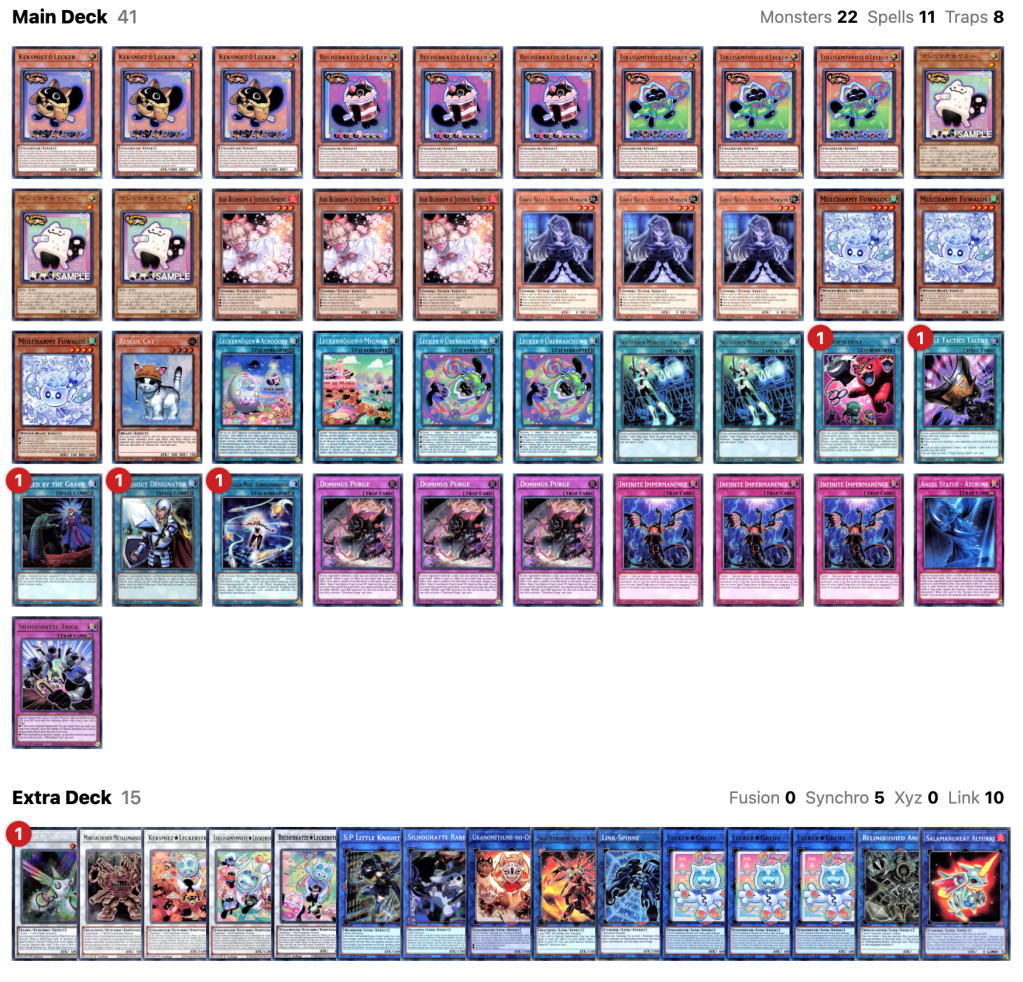
The Extra Deck functions as a toolbox or a second hand that you always have access to. It comprises different monster types, including Fusion, Link, XYZ, and Synchro monsters. You summon these by using monsters from your field as resources/materials. For most decks, the strongest monsters reside here.
For many (though not all) archetypes, monsters found in the Main Deck usually serve one purpose; they are materials or resources used to summon stronger monsters from the Extra Deck. There are exceptions to this, but probably 90% of decks will function in this way. These main deck monsters often have effects such as adding other cards from your deck to your hand, or summoning monsters/setting spells or traps to your field. Many Extra Deck monsters serve as a bridge to summon even stronger Extra Deck monsters. Some decks build their end board in only a few effects. Others summon monsters or activate effects more than 20 times per turn.
Interaction
You do all of this while your opponent tries to stop you. If they went first, they could use cards already on the field to try to stop you. If they went second, they could use what are commonly called “hand traps.” These are not necessarily actual Trap Cards (though some may be). They are cards with Quick Effects (Spell Speed 2) that can be activated from the player’s hand (even on your opponent’s turn) if certain conditions are met. Examples of these effects include, but are not limited to:
- Negating a summon.
- Negating a card being added to the hand.
- Destroying a card.
- Drawing a card every time the opponent summons from the Extra Deck.
- Banishing any card sent to the graveyard.
Ash Blossom & Joyous Spring is a great example of a popular hand trap.
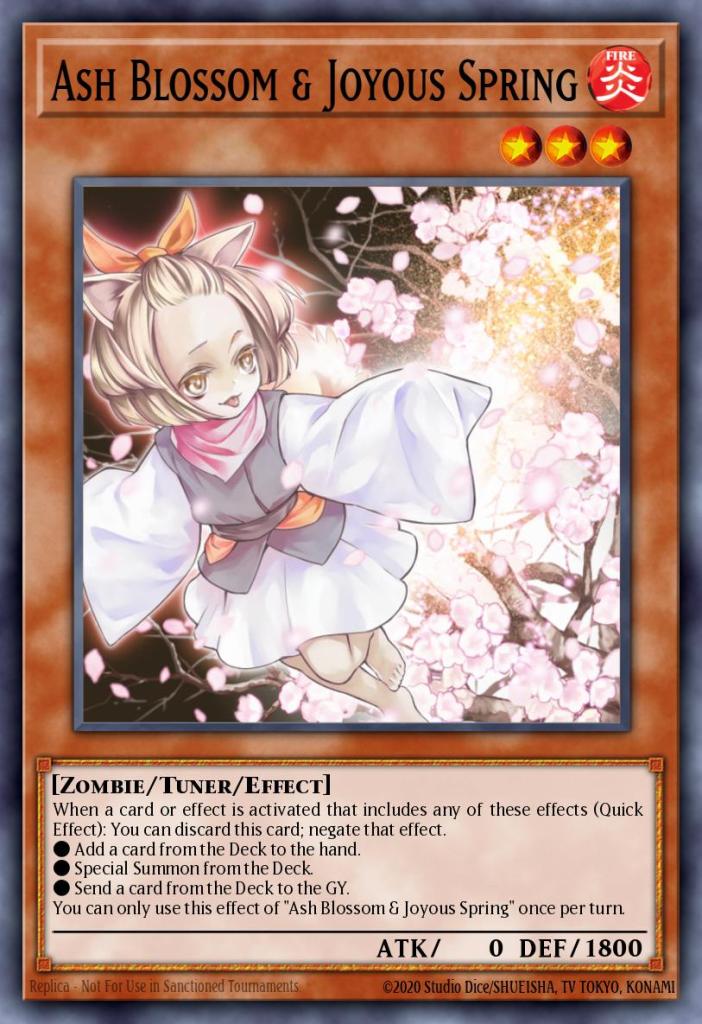
“When a card or effect is activated that includes any of these effects (Quick Effect): You can discard this card; negate that effect.
● Add a card from the Deck to the hand.
● Special Summon from the Deck.
● Send a card from the Deck to the GY.
You can only use this effect of “Ash Blossom & Joyous Spring” once per turn.”
Deck Building
You build a deck from a pool of over 12,000 cards in line with the Banlist. You can include 3 copies of most cards. Some cards are limited to 2 or 1 copy per deck, and some are banned entirely. Most of the 12,000 cards are rubbish and see no play in any format. Even the strongest archetypes have cards that are never included in decks because they are too weak.
An archetype is a set of cards under a specific name designed to work together. Archetypes with similar mechanisms can be combined to form a single deck. These cards form your “Engine.”
- Engine Cards: The in-archetype cards that propel your strategy and build your field of cards (including monsters, spells and traps) to use against your opponent.
- Non-Engine Cards: Generic cards, usually hand traps (such as Ash Blossom & Joyous Spring), that do not serve to build your board but exist to stop your opponent from building theirs. They do not belong to a specific archetype and appear in most competitive decks.
Breaking Down the Deck
“Engine” cards serve specific functions. These functions can unofficially be broken down into categories such as: Starters, Searchers, Extenders and End Pieces.
- Starters: Cards that start your combo. Most decks have several starters that vary in quality. Powerful archetypes utilise “one-card starters,” where a single card in hand propels a chain of events to build a full end board if uninterrupted. Other starters may require supporting cards in the hand to reach full potential.
- Searchers: Cards that technically start a combo by adding the actual starter to your hand. For example, a Spell Card that searches for a specific monster.
- Extenders: Cards in the Main or Extra Deck that extend your combo further to build a stronger board.
- End Pieces: The cards you aim to finish your board with. These are usually powerful Extra Deck monsters with disruption effects (negates, destruction, banishing) or specific Spell/Trap cards that restrict your opponent’s actions.
More modern decks are powerful because many cards function as both a starter and an extender. The game as played today focuses on building your end board to be as powerful as possible in one turn while stopping your opponent from doing the same.
Example Combo Deck: Ryzeal
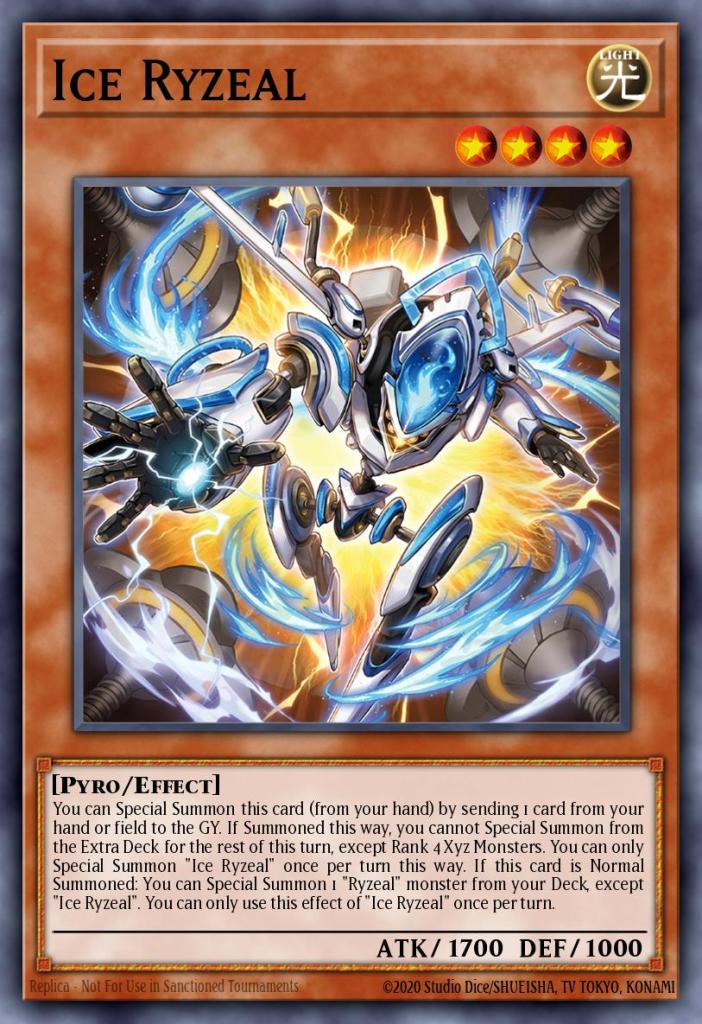
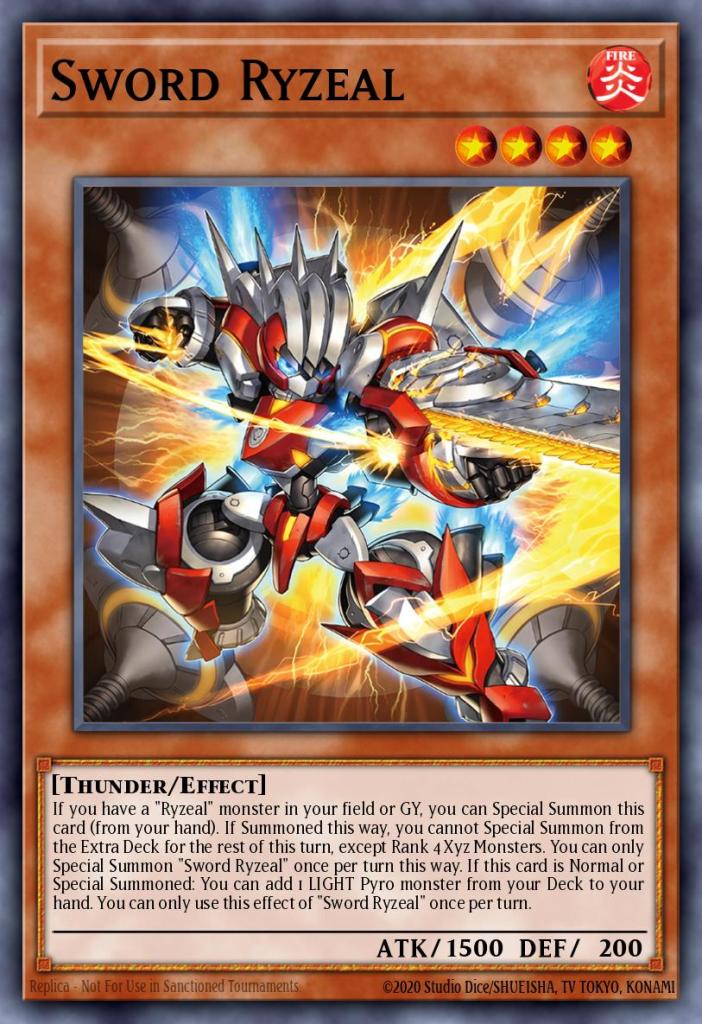

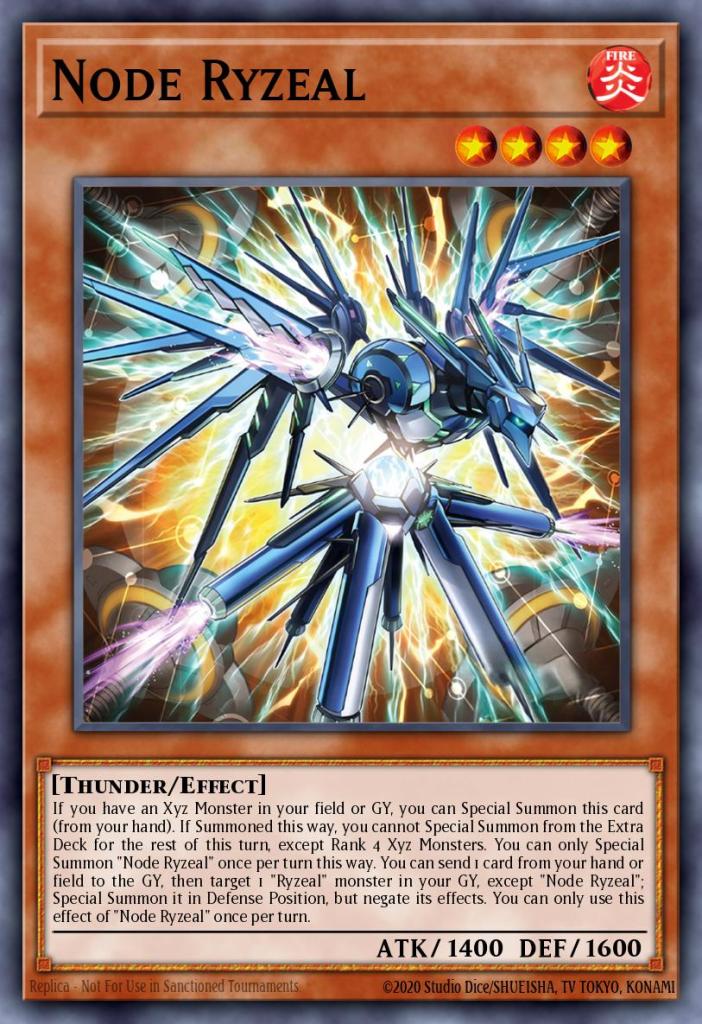
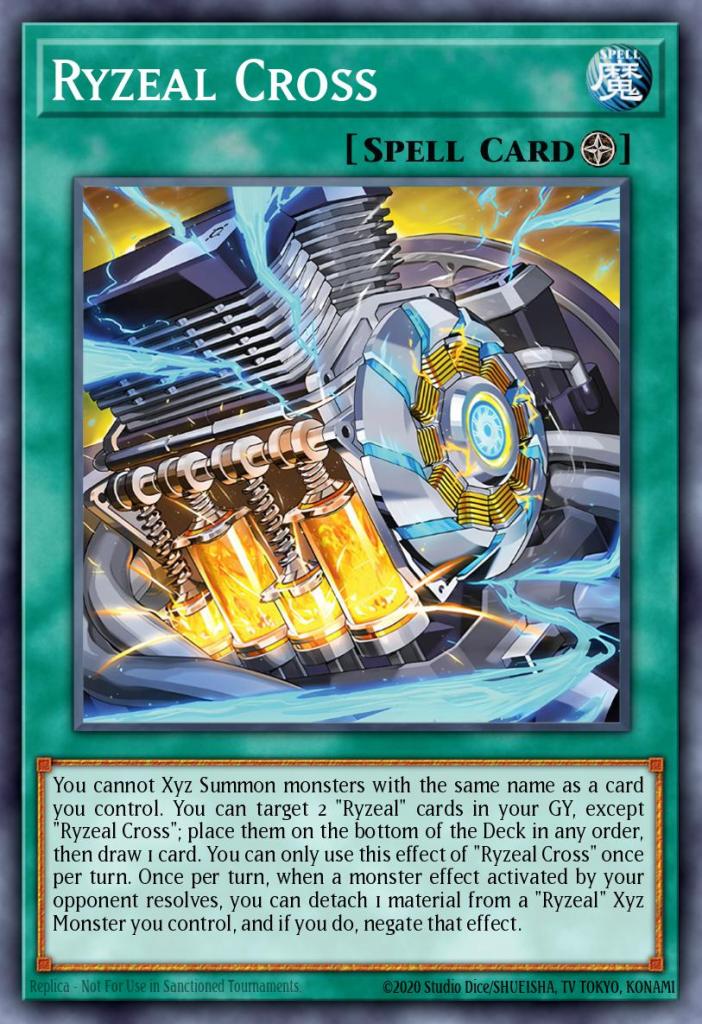

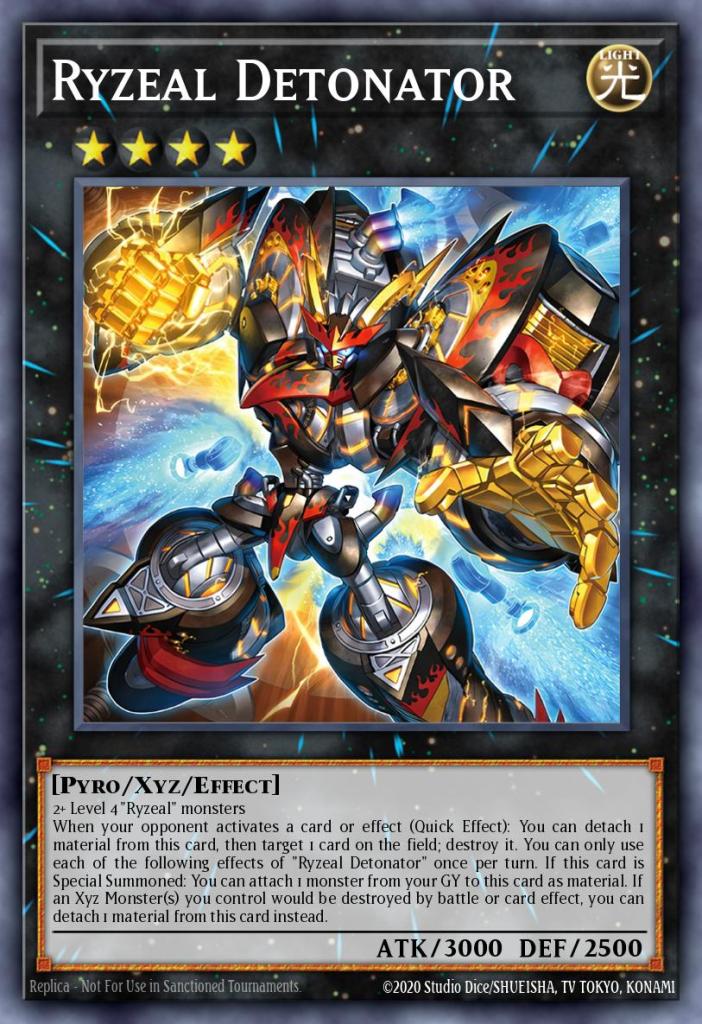

- Normal Summon Ice Ryzeal:
- Summon Effect:“If this card is Normal Summoned: You can Special Summon 1 ‘Ryzeal’ monster from your Deck, except ‘Ice Ryzeal’.”
- Use this effect to summon Sword Ryzeal from your main deck.
- Summon Effect:“If this card is Normal Summoned: You can Special Summon 1 ‘Ryzeal’ monster from your Deck, except ‘Ice Ryzeal’.”
- Special Summon Sword Ryzeal:
- On Summon Effect:“If this card is Normal or Special Summoned: You can add 1 LIGHT Pyro monster from your Deck to your hand.”
- Use this effect to add Ext Ryzeal to your hand.
- On Summon Effect:“If this card is Normal or Special Summoned: You can add 1 LIGHT Pyro monster from your Deck to your hand.”
- Xyz Summon Ryzeal Duo Drive:
- Method: Overlay Ice Ryzeal and Sword Ryzeal.
- Effect:“During your Main Phase: You can detach 2 materials from a monster(s) you control, and if you do, add 2 ‘Ryzeal’ cards with different names from your Deck to your hand.”
- Use this effect to add Ryzeal Cross and any other Ryzeal card to your hand.
- Special Summon Ext Ryzeal:
- Summon Condition:“You can Special Summon this card (from your hand) by sending 1 Xyz Monster from your Extra Deck to the GY.”
- On Summon Effect:“If this card is Normal or Special Summoned and you control no other face-up monsters, except Level/Rank 4 monsters: You can add 1 FIRE Thunder monster from your Deck to your hand.”
- Use this effect to add Node Ryzeal to your hand.
- Special Summon Node Ryzeal:
- Summon Condition:“You can send 1 card from your hand or field to the GY; Special Summon this card from your hand…”
- Xyz Summon Ryzeal Detonator:
- Method: Overlay Ext Ryzeal and Node Ryzeal.
- Effect:“When your opponent activates a card or effect (Quick Effect): You can detach 1 material from this card, then target 1 card on the field; destroy it.”
- Activate Field Spell Ryzeal Cross:
- Effect: “Once per turn, when a monster effect activated by your opponent resolves, you can detach 1 material from a ‘Ryzeal’ Xyz Monster you control, and if you do, negate that effect.”
The final board consists of Ryzeal Detonator and Ryzeal Cross. Detonator detaches a material to destroy a card, while Cross detaches a material from an Xyz Monster to negate a monster effect. Both are “Quick Effects” meaning they are usable during either player’s turn.
Ryzeal is a powerful archetype due to the versatility of its core monsters. Cards such as Ice Ryzeal, Sword Ryzeal, and Ex Ryzeal function simultaneously as combo starters and extenders. This dual utility allows the deck to play through hand traps and interruptions to more consistently reach its end board.
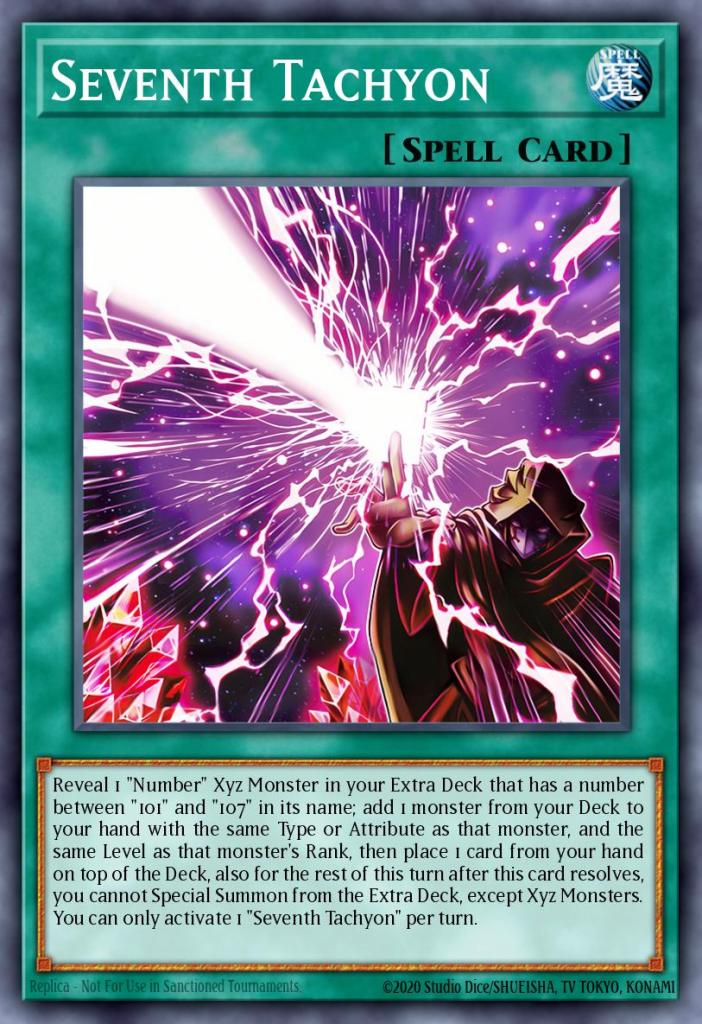
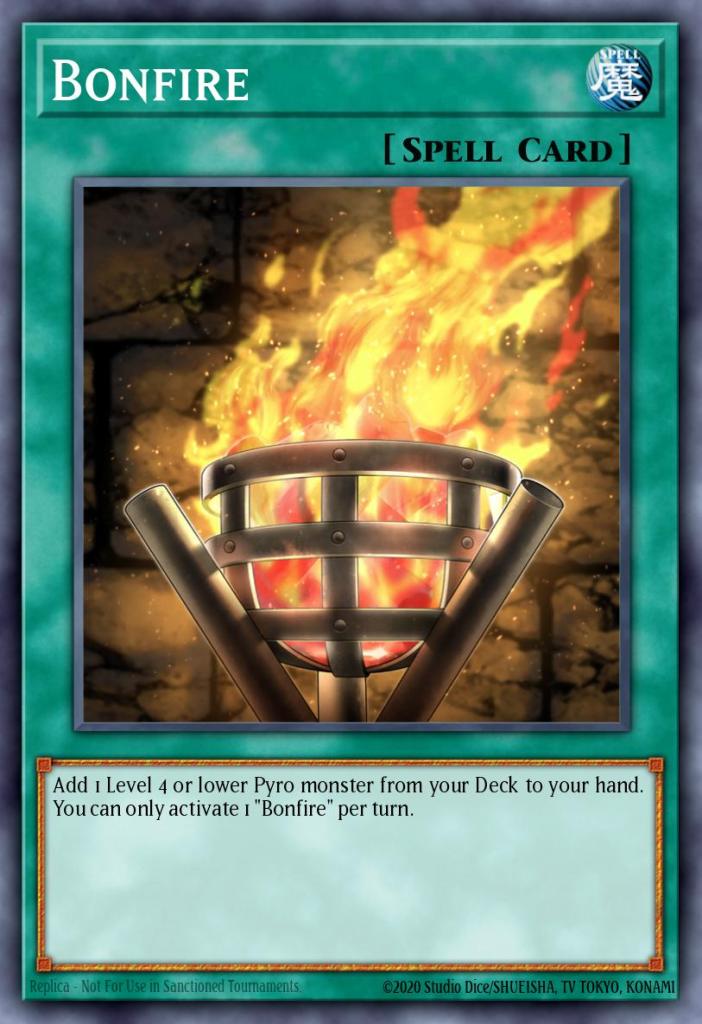
Spell cards such as Bonfire and Seventh Tachyon further enhance this consistency. These searchers allow you to add Ice Ryzeal or Ex Ryzeal from your main deck to your hand, ensuring more consistent access to combo pieces.

Overcoming the Complexity
The most daunting part of Modern Yu-Gi-Oh! is that there is no figuring out your deck as you play. Decks are constructed with a specific end board in mind. Modern decks utilise specific cards chosen solely to reach that goal, rather than functioning as ends in themselves. You must understand what each card does and how it advances your game state towards that goal.
This task is less intimidating than it initially appears. While you must know the function of every card in your deck, you don’t need to memorise 40 unique effects. Most decks run 3 copies of their best cards to maximise consistency. In a standard 40-card deck, this could result in as few as 14 unique cards to learn. Once you understand these core interactions, the rest of the strategy follows naturally.
 60 Card Slop
Leave a comment